
Stop Wasting Money on Emergency AC Repairs in Maui: Try These 7 Quick Prevention Hacks

If you manage property in Maui, you've probably noticed a familiar pattern: AC systems seem fine one day, then suddenly they're down during peak occupancy, costing you thousands in emergency repairs and unhappy tenants. The thing is, most of these breakdowns aren't actually sudden: they're the result of small maintenance issues that compound over weeks or months until the system finally gives out.
The question worth asking: if you took a hard look at your HVAC maintenance routine right now, would it earn a passing grade from the perspective of someone staying in your units during July? Because the reality across Maui's hospitality and commercial spaces is that preventable failures are the single biggest drain on maintenance budgets, and most property managers don't realize how much money they're leaving on the table.
Here's the good news: you don't need to be an HVAC expert to dramatically reduce your emergency repair costs. These seven prevention hacks address the most common failure points in air conditioning systems, and they're specifically tailored to the unique challenges of operating air conditioning Maui properties face: salt air, volcanic dust from the trade winds, high humidity, and year-round operation.
1. Replace or Clean Air Filters Monthly (Not Quarterly)
Most mainland advice says change filters every three months. That timeline doesn't work in Maui. The trade winds carry volcanic dust, pollen, and salt particles that clog filters fast: sometimes in as little as two weeks if your property is windward or near agricultural areas.
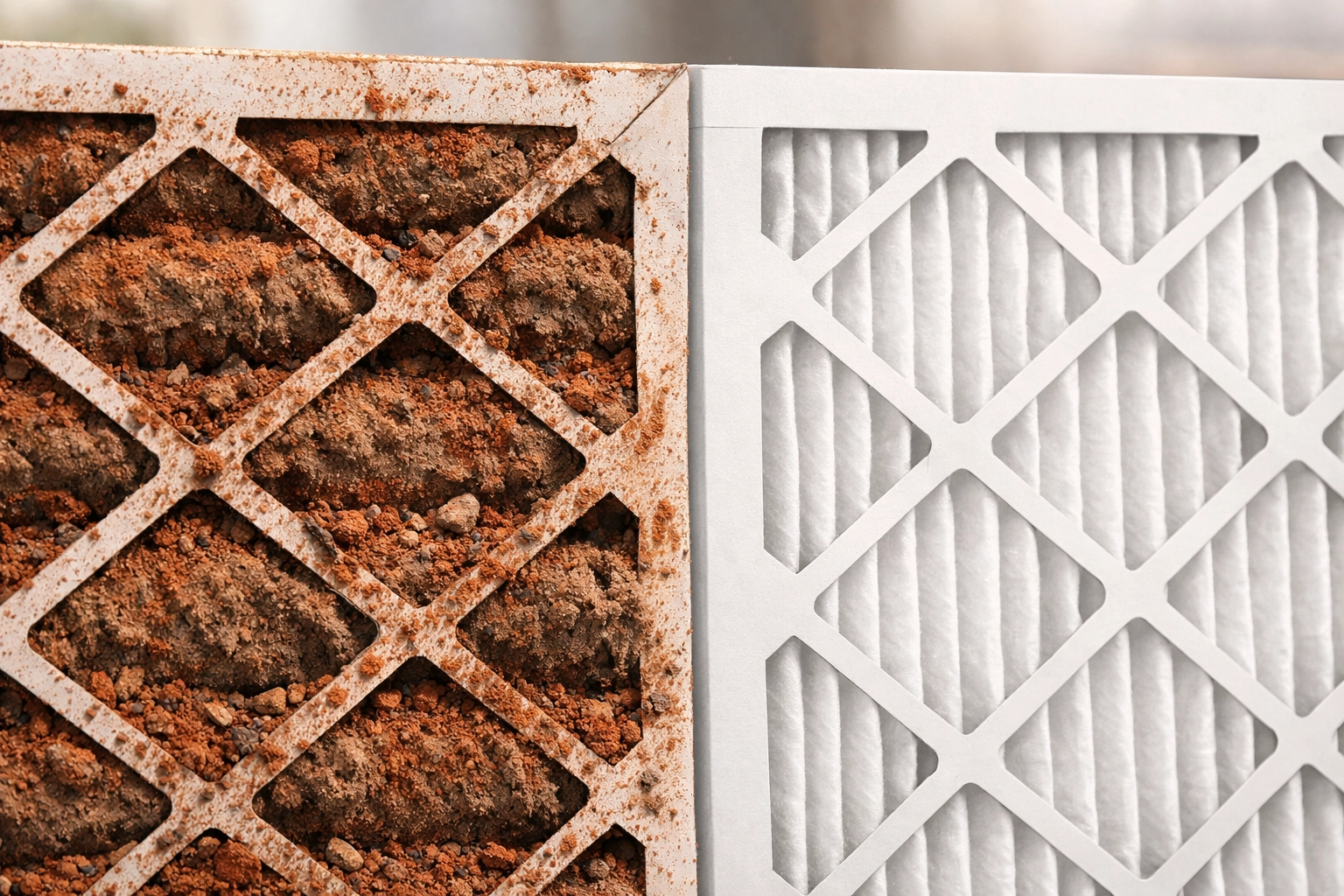
When filters get clogged, your system works overtime trying to pull air through the blockage. That extra strain increases energy costs by 15-20% and puts stress on the blower motor, which is one of the more expensive components to replace. If you have pets allowed in your rentals or you're near construction, you might need to check filters twice a month.
Here's what actually works: Set a recurring calendar reminder for the first of every month. Buy filters in bulk: you'll pay about $3-5 per filter when buying a 12-pack instead of $8-12 for individual units at the hardware store. Keep them on-site so your maintenance team doesn't have an excuse to skip this step.
2. Keep Your Outdoor Condenser Unit Clear of Debris
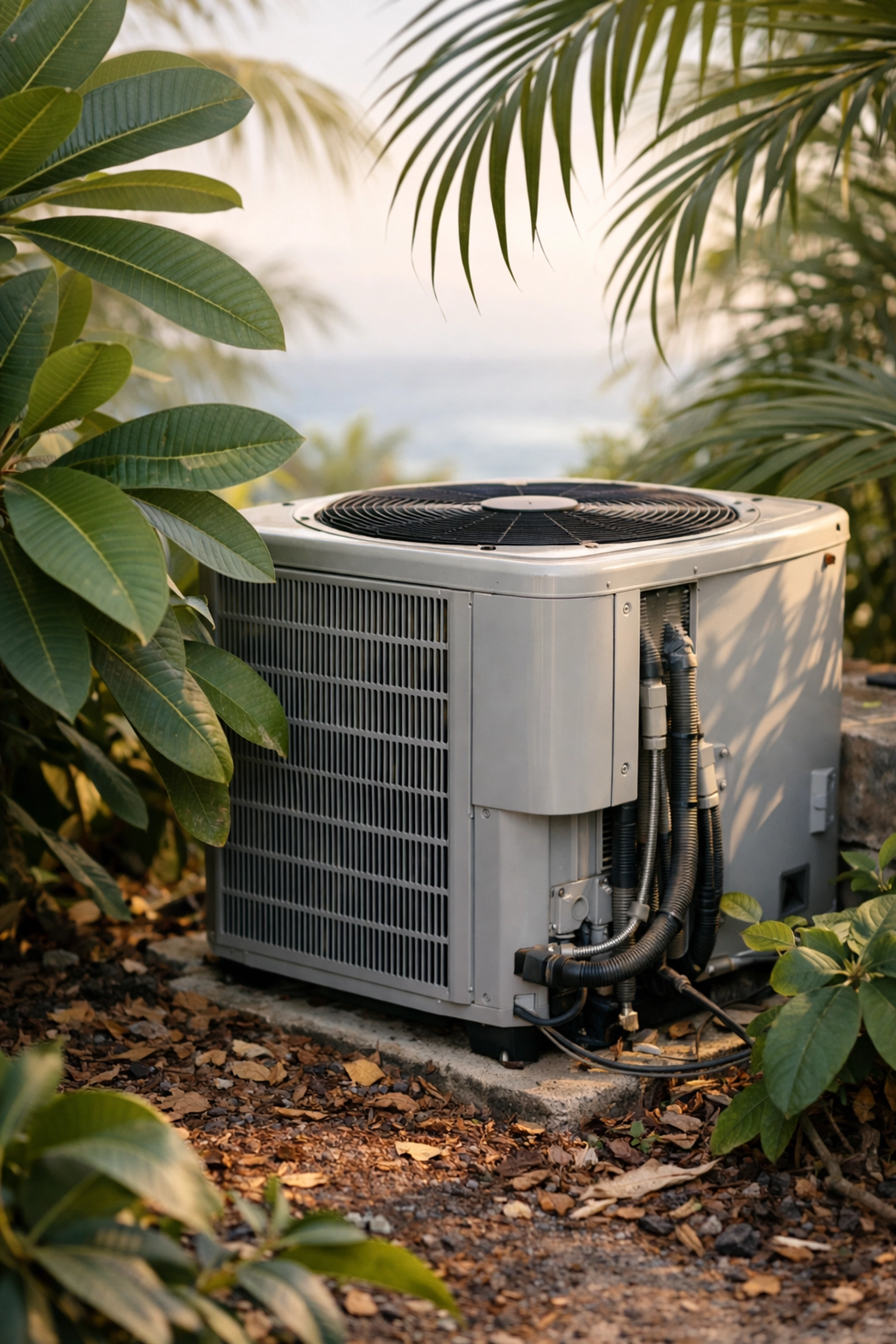
The outdoor unit (the big box with the fan) needs at least two feet of clearance on all sides to function properly. In Maui, that means fighting back plumeria leaves, grass clippings from landscape crews, and the occasional gecko nest.
This isn't just about aesthetics. When debris blocks airflow around the condenser, the unit can't release heat effectively. The compressor works harder, runs hotter, and fails earlier: often right when you need it most. For properties near the ocean (which is most of Maui), there's another factor: salt mist accumulates on the condenser coils and corrodes the metal fins.
Walk your properties once a week and clear any vegetation or debris within three feet of outdoor units. If you're oceanfront, consider hosing down the condenser unit monthly to rinse off salt buildup. Just spray from the inside out so you're not pushing debris further into the fins.
3. Flush the Condensate Drain Line Every Few Months
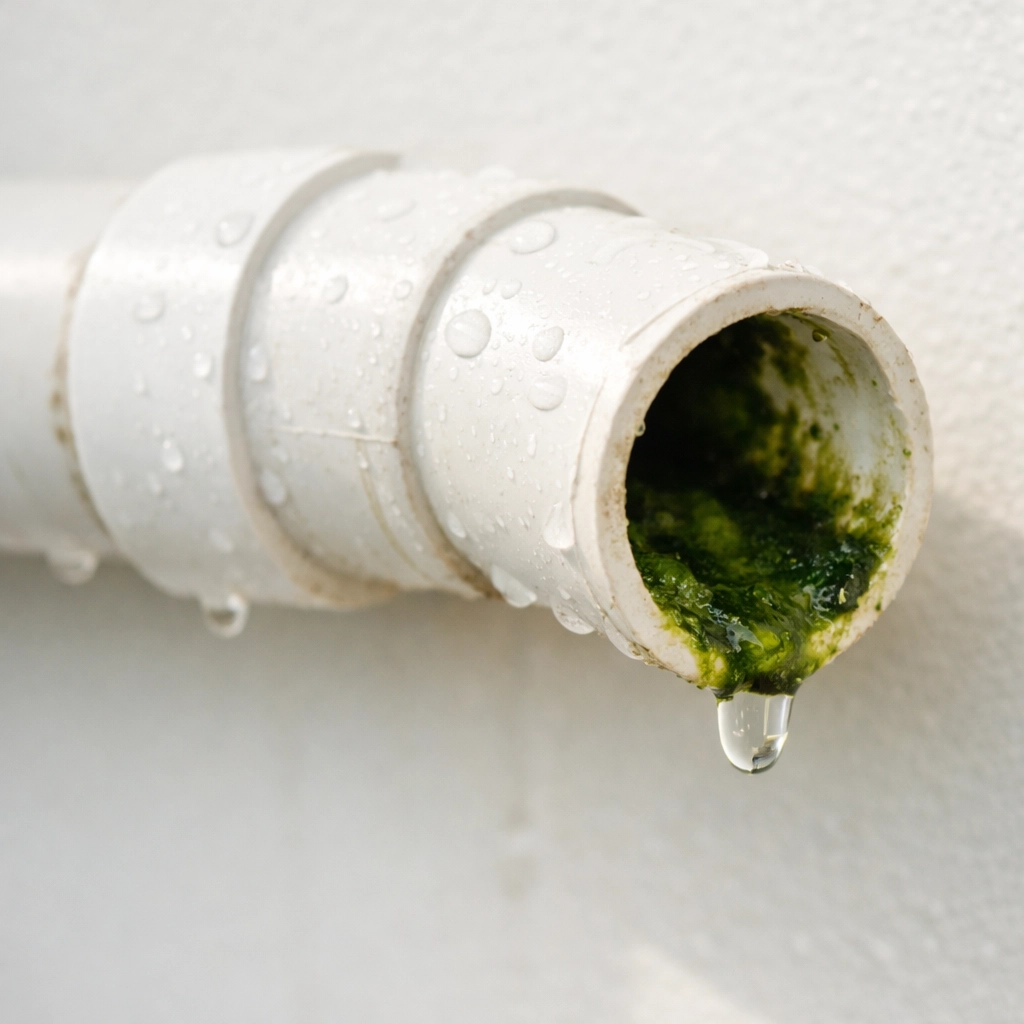
This is the most overlooked maintenance task, and it's responsible for a shocking number of emergency service calls. Your AC system produces gallons of condensation daily as it removes humidity from the air. That water needs somewhere to go, and it flows through a small PVC pipe called the condensate drain line.
In Maui's humid climate, this drain line becomes a perfect breeding ground for algae and mold. When the line clogs, water backs up into the drain pan, triggers the float switch, and shuts down your entire system. Worse, if the float switch fails or doesn't exist on older units, water overflows into walls or ceilings: now you're dealing with water damage on top of ac repair maui costs.
The fix takes five minutes: locate the drain line (usually a PVC pipe near your indoor air handler), pour a cup of bleach mixed with water down the line, and let it sit for 30 minutes before flushing with water. Do this quarterly, or monthly if you've had algae problems before.
4. Schedule Annual Professional Inspections Before Summer
Even if your system seems to be running fine, an annual tune-up from a qualified hvac maui technician will catch the small problems before they become emergency repairs. This isn't about finding work to do: it's about identifying the $150 capacitor that's starting to fail before it takes out your $1,200 compressor.
Professional inspections cover things you can't easily do yourself: checking refrigerant levels, testing electrical connections, measuring airflow and temperature differentials, inspecting ductwork for leaks, and verifying the condensate drain system is working properly. For commercial properties or multi-unit buildings, these inspections should happen in March or April, before summer occupancy peaks.
The math is straightforward: a preventive tune-up costs $100-200 per unit. An emergency compressor replacement costs $1,500-3,000 plus lost rental income if units are down during peak season. And if you're managing multiple units, the relationship with a regular service provider means you get priority scheduling when you actually do have an emergency.
5. Monitor Refrigerant Levels and Address Leaks Immediately
Low refrigerant is never a simple "top it off" situation: it means you have a leak somewhere in the system. Refrigerant doesn't get used up like gas in a car; it circulates in a closed loop indefinitely unless something's wrong.
The warning signs are pretty obvious: rooms that won't cool below 76-78°F even when the system runs constantly, ice forming on the refrigerant lines near the air handler, or a sudden spike in your electric bill. If you notice any of these, don't wait for your annual inspection. Low refrigerant forces the compressor to work harder and can cause it to overheat and fail.
Refrigerant leaks need professional repair: this isn't a DIY situation. But catching them early (when it's a $300 fix to repair a leak and recharge the system) versus late (when it's a $2,500 compressor replacement) makes a huge difference to your maintenance budget.
6. Clean Condenser and Evaporator Coils Annually
You've probably noticed how dust accumulates on surfaces in Maui properties: sometimes it feels like you dust on Monday and by Friday there's a visible layer again. That same dust coats your AC coils, and when coils get dirty, they can't transfer heat effectively.
The condenser coil (outside) and evaporator coil (inside) are covered in thin metal fins designed to maximize surface area for heat transfer. When dust, pollen, and salt residue build up on these fins, the system's cooling capacity drops by 20-30%. Your AC runs longer to achieve the same temperature, energy costs spike, and component wear accelerates.
Most property managers can handle basic condenser cleaning with a garden hose and a coil cleaning spray from the hardware store. Evaporator coils are trickier since they're inside the air handler, so this is usually part of your annual professional service. For oceanfront properties, consider having coils professionally cleaned twice a year: salt corrosion is aggressive in marine environments.
7. Install Programmable Thermostats and Use Them Properly
Constantly adjusting temperature settings puts unnecessary wear on your AC components. Every time the system cycles on and off, there's a surge of electrical current through the compressor and motors. Minimize these cycles, and you extend equipment life.
For vacation rentals, programmable thermostats let you maintain reasonable temperatures (78°F is comfortable in Hawaii's humidity) when units are occupied, and bump up to 82-84°F between guests. That 4-6 degree difference significantly reduces runtime without letting humidity build up or creating that stuffy feeling when guests first arrive.
For commercial properties, the same principle applies: program higher temperatures during closed hours, and pre-cool spaces 30 minutes before opening rather than cranking the thermostat down to 68°F and hoping it cools faster (it doesn't: it just wastes energy and stresses the system).
Smart thermostats take this further by learning patterns and adjusting automatically, but even a basic $40 programmable unit from the hardware store will cut your cooling costs by 10-15% and reduce wear on your system.
What This Adds Up To
These seven prevention hacks aren't revolutionary: they're the basics that separate property managers with predictable maintenance costs from those who constantly deal with emergency breakdowns. The pattern across Maui's hospitality and commercial spaces is pretty clear: properties that implement these simple maintenance routines spend 40-50% less on HVAC repairs over a five-year period compared to properties that only call for service when something breaks.
The real question is whether your current maintenance approach would hold up to scrutiny during peak season, when a single failed AC unit in a booked property costs you not just the repair bill, but lost revenue, angry guests, and the scramble to find emergency accommodation alternatives. Because in Maui's vacation rental market, where reviews and reputation drive bookings, mechanical failures during someone's once-a-year trip create consequences that extend well beyond the immediate repair costs.
If you're managing multiple properties or commercial spaces, consider documenting these maintenance tasks in a simple tracking system: even just a spreadsheet noting when filters were changed, drains were flushed, and coils were cleaned. That documentation not only keeps your team accountable, it also provides valuable data if you need to make the case for equipment replacement or justify maintenance budgets to property owners.
Comments