
Are Manual HVAC Logs Dead? Why Savvy Property Managers Are Switching to 24/7 Smart Monitoring

It is mid-March here in the islands, and if you’ve been outside lately, you know the "cool" season is making its polite exit. As the humidity begins its annual climb and the trade winds take their occasional breaks, the collective mechanical heartbeat of Maui and Oahu starts to pound a little harder. For property managers and resort owners, this time of year usually signals the start of the "Check the Clipboard" marathon.
We’ve all seen it: a well-intentioned maintenance tech walking through a mechanical room with a pen tucked behind their ear, squinting at a pressure gauge, and scribbling numbers into a tattered logbook. It’s a ritual as old as the hills: or at least as old as the first chillers installed on Front Street. But as we sit here in 2026, looking at the sheer complexity of modern hospitality and commercial operations, a critical question arises: is that clipboard actually protecting your assets, or is it just providing a false sense of security?
At Alltemp, we’ve spent a lot of time looking at the data, and the signal is clear. Manual HVAC logs aren't just aging; they are increasingly becoming a liability in a world where downtime isn't just an inconvenience: it’s a catastrophic blow to the bottom line.
The Mirage of "Everything Looks Good"
The fundamental flaw with manual monitoring is that it represents a single, fleeting moment in time. If your technician checks the compressor at 10:00 AM and records a "normal" temperature, that’s great for 10:00 AM. But what happens at 2:15 PM when a power surge causes a controller to glitch? Or at 3:00 AM on a Sunday when a condenser fan motor decides it’s had enough of the salt air and calls it quits?
In a manual world, you don’t find out about those failures until a guest complains that their room feels like a sauna, or worse, a chef walks into a walk-in freezer to find five figures' worth of Ahi tuna sitting in a puddle of its own melted hope.
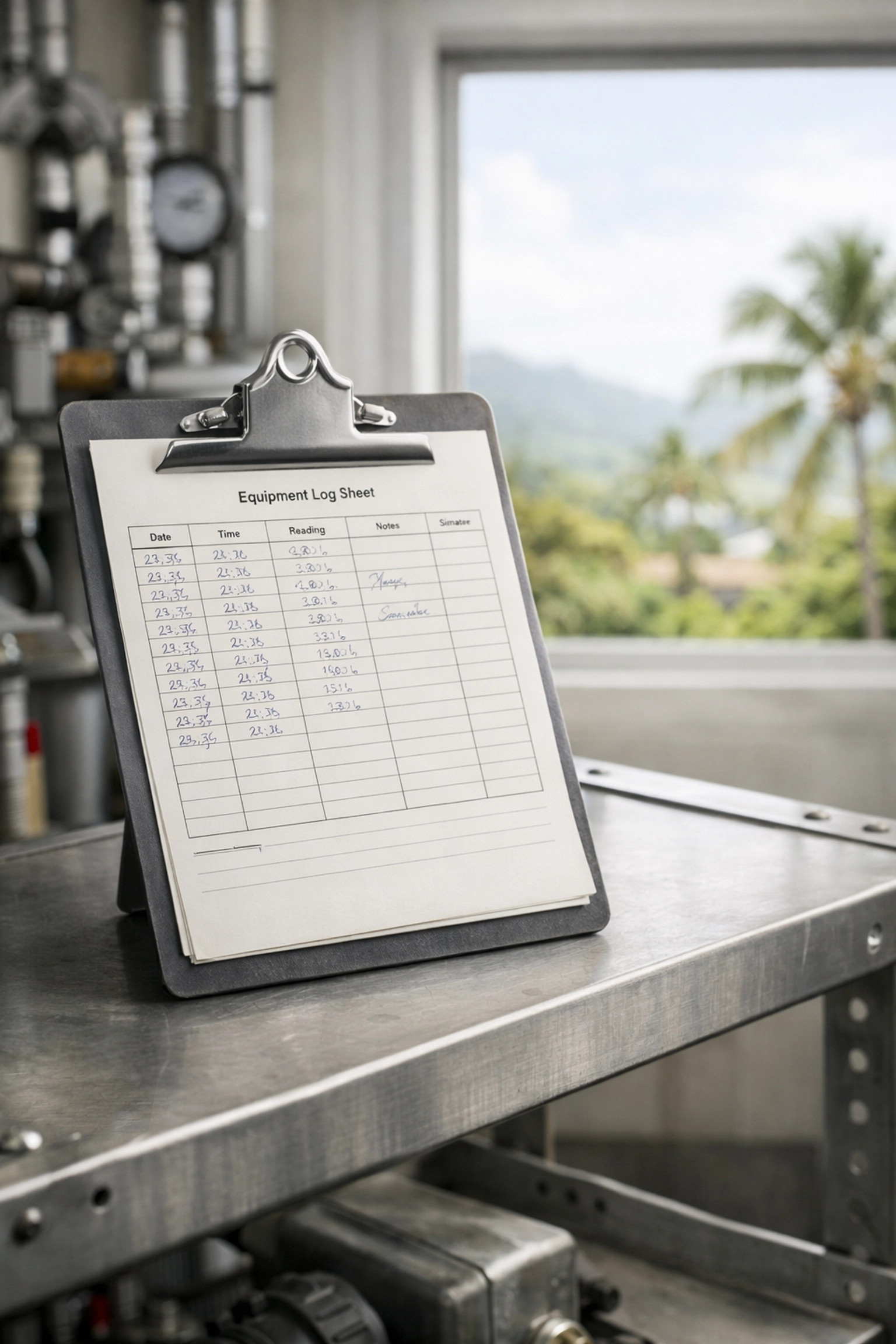
Manual logs rely on human-driven tuning. This means we usually only adjust things after the bill spikes or the "it’s too hot" calls start flooding the front desk. It’s a reactive stance. In a high-stakes environment like a Maui resort or a busy Oahu commercial complex, reacting is just a polite word for losing money. When you're constantly chasing ac repair maui services after the fact, you're paying a premium for emergencies that likely could have been spotted weeks in advance.
The Hawaii Factor: Salt, Humidity, and High Stakes
Operating HVAC and refrigeration systems in Hawaii isn't like operating them in Phoenix or Denver. We have a unique set of "accelerants" that turn minor issues into major failures overnight.
Salt Air Corrosion: The very air that makes our islands paradise is a slow-motion wrecking ball for condenser coils.
High Ambient Humidity: Your systems aren't just cooling the air; they are fighting a constant battle to dehumidify it. This puts an immense latent load on the equipment.
Utility Costs: Let’s be honest, Hawaii’s energy prices aren't exactly "budget-friendly." An HVAC system running 15% inefficiently because of a dirty coil or a drifting sensor is a massive hidden tax on your operation.
When you rely on manual logs, you're often missing the slow "drift" in performance. You don't notice the system is staying on five minutes longer each cycle to reach the set point. You don't notice the head pressure creeping up as salt buildup chokes the airflow. By the time a human notices these changes during a weekly or monthly walkthrough, the damage to the compressor’s lifespan: and your utility bill: is already done.
Enter the 24/7 Sentinel: Smart Monitoring
This is where the shift is happening. Savvy property managers across the islands are moving toward refrigeration status monitoring and smart HVAC systems.
Instead of a guy with a pen, imagine a network of multi-variable sensors that never sleep, never take lunch breaks, and don't get distracted by a beautiful sunset. These sensors track temperature, humidity, vibration, and energy draw in real-time.

When we implement smart monitoring at Alltemp, we aren't just looking for "on" or "off." We are looking for anomalies. Our cloud-based analytics can detect when a motor is starting to vibrate outside of its normal frequency: a classic sign of impending bearing failure. We can see when a walk-in cooler is struggling to maintain temperature during peak loading times, even if the "average" temperature looks okay on a manual log.
This is the move from reactive maintenance to predictive maintenance. It’s the difference between replacing a $500 part during a scheduled visit and replacing a $15,000 compressor on an emergency basis during a holiday weekend.
The CFO’s Perspective: Why the Math Matters
As the CFO here at Alltemp, I’m always looking at the "why" behind the technology. It’s not just about cool gadgets; it’s about the ROI. If you are managing a property in Kaneohe or Kihei, your biggest variable costs are usually labor and energy.
Smart monitoring addresses both.
Labor Efficiency: Instead of your maintenance team spending hours walking the property to check gauges, they can focus on actual repairs and preventative tasks. The system tells them exactly where to go.
Energy Optimization: By identifying systems that are short-cycling or running with inefficient parameters, we can trim thousands off the annual energy spend.
Asset Longevity: When equipment runs within its optimal "envelope," it lasts longer. Period. Replacing a chiller every 15 years instead of every 10 is a massive win for your capital expenditure budget.
Beyond the Screen: The "Alltemp" One-Two Punch
Monitoring is only half the battle. Knowing there is a problem is great, but you still need a solution that works in the unique Hawaiian environment. This is where our integrated approach comes into play.
When our monitoring system flags that a unit is running hot in Kahului or Wailuku, we don’t just send a tech to "look at it." We deploy specific solutions like Hydro Jetting.
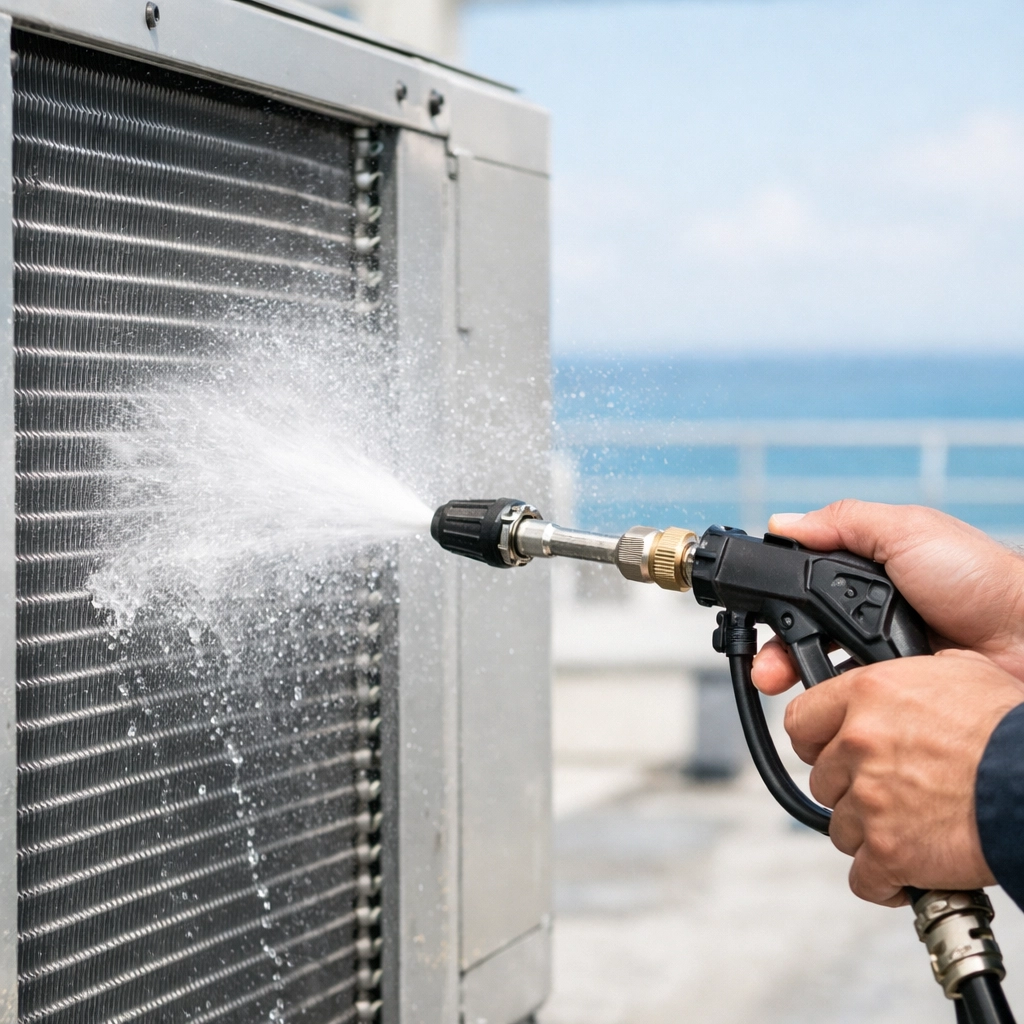
In many coastal properties, traditional coil cleaning just moves the salt and debris deeper into the fins. Our Hydro Jetting service uses high-pressure, specialized equipment to blast away the salt crust and grime that manual cleaning misses. When you combine the "eyes" of smart monitoring with the "muscle" of deep-clean maintenance, your air conditioning maui systems operate at a level of efficiency that manual-log properties simply can't match.
Are You Flying Blind?
If your current HVAC strategy relies on a stack of papers in a binder, it might be time for an honest evaluation. If your facility were audited today, would your logs show a clear picture of health, or just a series of "OK" checkmarks leading up to your last major breakdown?
The transition to smart monitoring isn't just about technology; it's about peace of mind. It’s about knowing that while you’re at home in Pukalani or Kapalua, your systems are being watched by a digital sentinel that understands the stakes of your business.

The era of the manual log isn't just ending: it has evolved. The properties that thrive in the coming years will be the ones that embrace data to drive their decisions. They will be the ones that stop wondering "if" their refrigeration will hold through the night and start knowing exactly how it’s performing every second.
At Alltemp, we’re helping managers across Oahu and Maui make that switch. We provide the tools, the tech, and the local expertise to ensure that your "Island Time" isn't interrupted by mechanical failure.
Is your property ready to step out of the clipboard era? The data is waiting. All you have to do is contact us to start the conversation. Let’s move your maintenance strategy from "fingers crossed" to "fully optimized."
Comments