
Is Your Maui Resort Wasting Money? 7 HVAC and Refrigeration Mistakes Commercial Property Managers Make (And How to Fix Them)

Here's an uncomfortable question: If a team of energy auditors showed up at your Maui or Oahu property tomorrow, would your HVAC and refrigeration systems earn a passing grade: or would they expose thousands in wasted operational spend?
Several large resort and hospitality properties across Hawaii have recently tackled this question head-on. One property reduced energy consumption by 20 percent after addressing systemic inefficiencies. Another cut domestic hot water costs by 40 percent through strategic upgrades. A third saved nearly 480,000 kWh annually by fixing what turned out to be relatively straightforward mistakes in how their systems operated.
These aren't isolated success stories: they're signals. Together they highlight a familiar reality for commercial property managers across the islands: many facilities are hemorrhaging money through HVAC and refrigeration mistakes that often go unnoticed until they become expensive emergency repairs or show up as line items that make ownership nervous.
After nearly three decades working with Hawaii's toughest climate conditions, we've seen the same seven mistakes repeat across hotels, resorts, commercial kitchens, and multi-property portfolios. Here's what's costing you money: and how to fix it before your next budget review.
Mistake #1: Treating Preventive Maintenance Like an Optional Expense
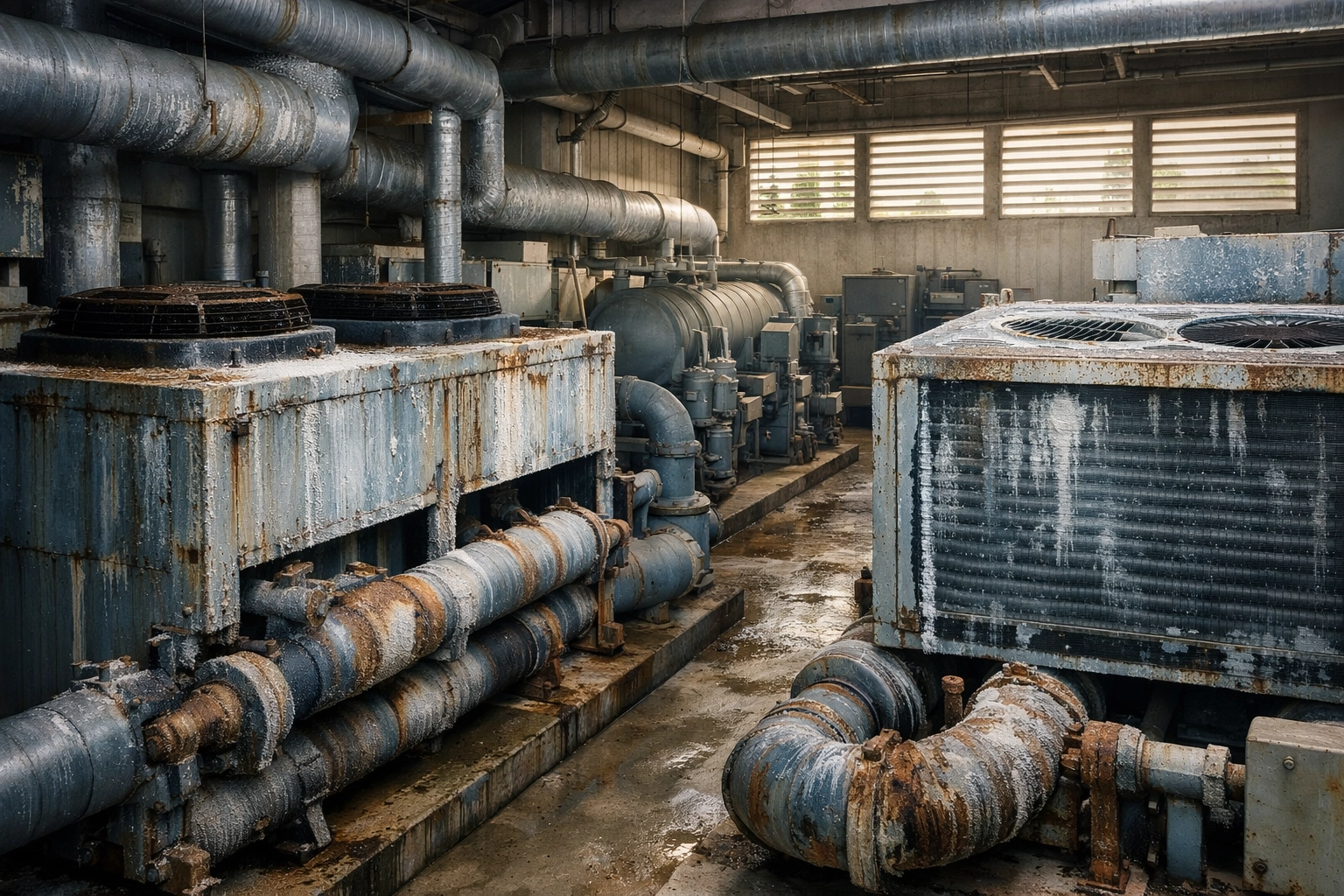
Walk through the mechanical rooms of most Maui resorts during slow season, and you'll find the same story: deferred maintenance schedules, filters that should've been changed last month, and a general sense that air conditioning maintenance can wait until something actually breaks.
It can't.
Hawaii's salt air, humidity, and year-round cooling demands create an operating environment where systems don't gradually decline: they fail. And when a chiller goes down during peak occupancy, you're not just paying emergency rates for ac repair maui services. You're comp'ing rooms, relocating guests, and watching TripAdvisor reviews tank in real time.
The fix: Implement quarterly preventive maintenance schedules that account for Hawaii's accelerated wear patterns. This isn't the mainland where you can coast through shoulder seasons. Your systems run 24/7/365, and your maintenance approach needs to reflect that operational reality.
Mistake #2: Using Cleaning Methods Designed for Different Climates
Here's where things get specific. Most air conditioning maui systems get cleaned using methods developed for drier climates: low-pressure spray, chemical treatments that kind of work, and cleaning schedules based on continental assumptions about dust and debris.
But Maui isn't Phoenix. The combination of salt air, volcanic soil particulates, and biological growth creates a coil fouling situation that standard cleaning approaches simply don't address. Facilities run systems at reduced efficiency for months, watching utility bills creep upward, without connecting the dots to inadequate coil cleaning.
One resort discovered this when they upgraded chiller systems and saw 15 percent better efficiency than competitive models: but only after addressing how those coils were being maintained.
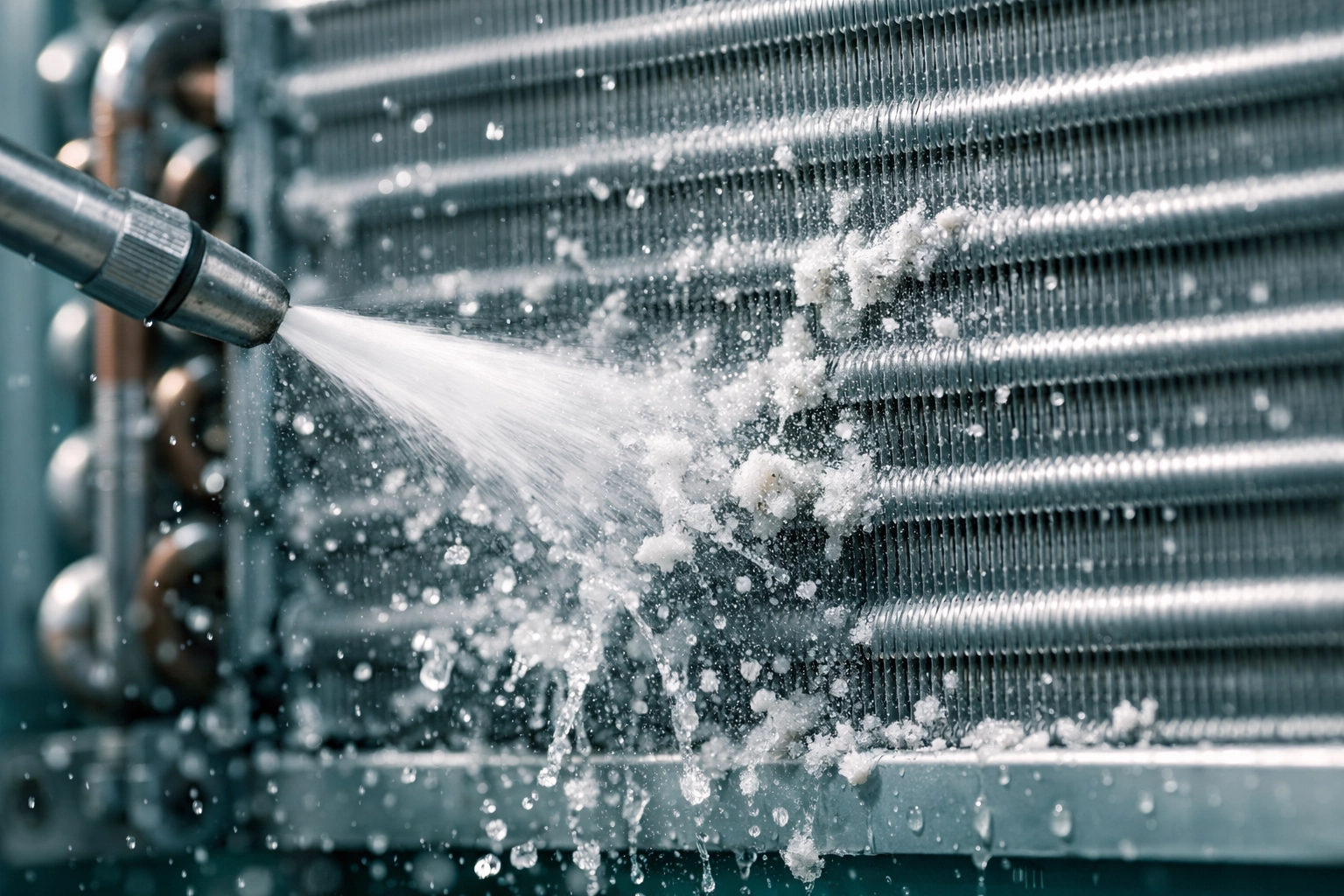
The fix: High Pressure Hydro Jet Coil Cleaning isn't just a fancier name for the same service. It's a different approach entirely: one that actually removes the salt, biological material, and compacted debris that standard methods leave behind. For properties serious about efficiency, it's the difference between guessing at performance and actually achieving it.
Mistake #3: Operating Without Real 24/7 Emergency Response
Let's clarify what "24/7 service" actually means in commercial hospitality. It doesn't mean someone answers the phone and schedules you for next Tuesday. It means technicians who arrive: not tomorrow, not Monday morning: but in the middle of Saturday night when your walk-in cooler starts failing with Sunday brunch inventory inside.
Too many property managers discover the difference between advertised availability and actual response capability when they're standing in a mechanical room at 2 AM, watching food costs evaporate while a service company promises someone will be there "first thing in the morning."
The fix: Establish relationships with refrigeration service hawaii providers before you need them. Ask specific questions: What's your actual response time? Do you stock parts for commercial equipment? Have you worked with properties similar to ours? Nearly three decades in Hawaii's commercial market means we've probably seen your exact failure scenario before: and we stock the parts to fix it.
Mistake #4: Ignoring Hawaii's Unique Climate Challenges
Mainland HVAC approaches don't translate to island operations. The salt air alone accelerates corrosion at rates that shock continental technicians. Add constant humidity, minimal temperature variation, and the biological growth that thrives in Hawaii's climate, and you've got a maintenance environment that requires specialized knowledge.
Properties that bring in mainland contractors or use generic hvac maui service providers often end up with recommendations that sound reasonable but don't account for how equipment actually performs in this specific environment.
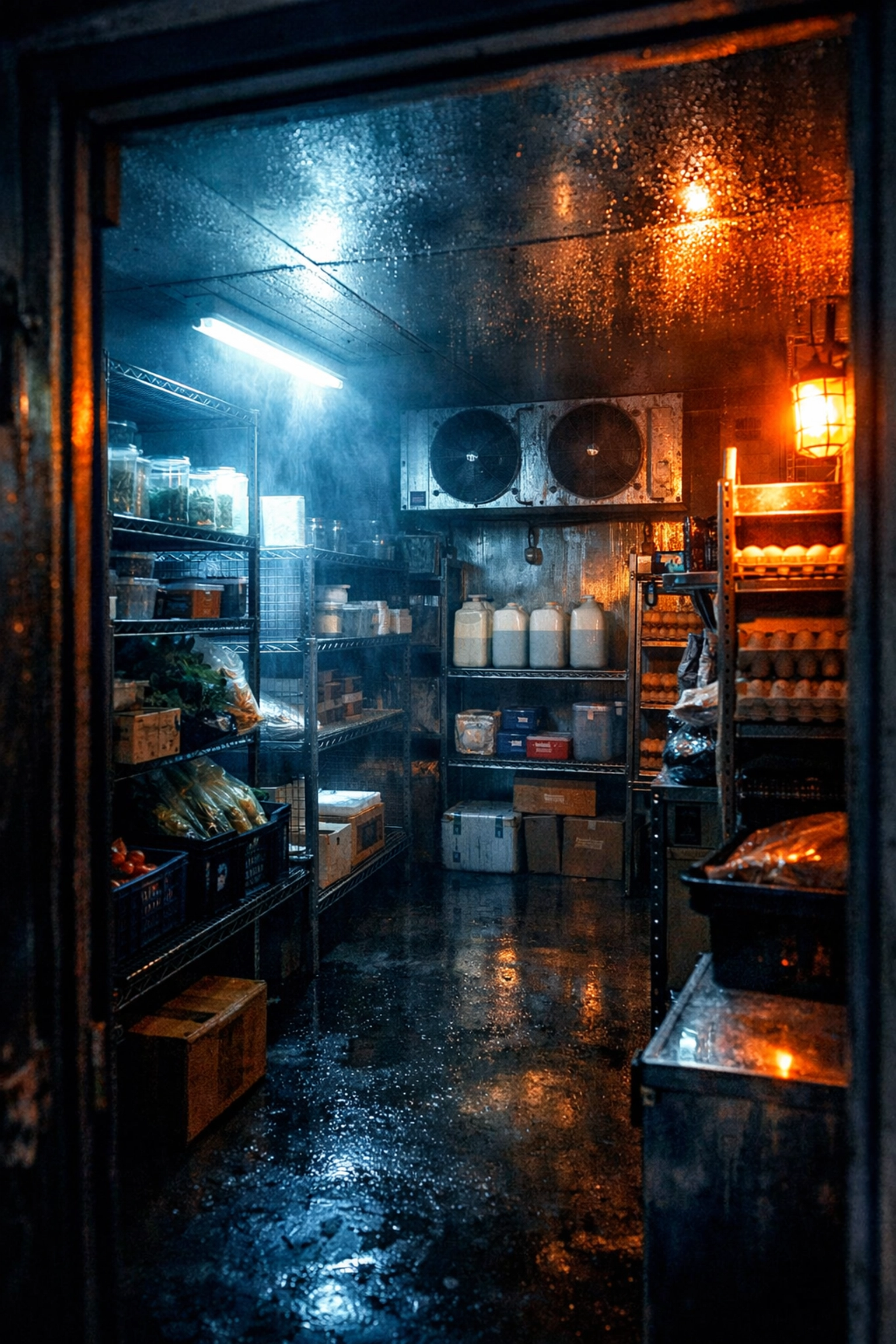
The fix: Work with technicians who've spent years: not months: operating in Hawaii's climate. The difference shows up in equipment selection, maintenance schedules, and the ability to predict failure patterns before they become emergency calls. Experience in this specific environment isn't just nice to have. It's the baseline requirement for effective service.
Mistake #5: Running Systems Reactively Instead of Predictively
Here's what reactive maintenance looks like: equipment runs until it fails, you call for repairs, lose operational capacity during the fix, and repeat the cycle. It's expensive, disruptive, and completely avoidable.
One resort figured this out when they installed smart monitoring across hundreds of guest units and started seeing real-time performance data instead of waiting for guest complaints or system failures. The result? Nearly 480,000 kWh in annual savings and dramatically fewer emergency calls.
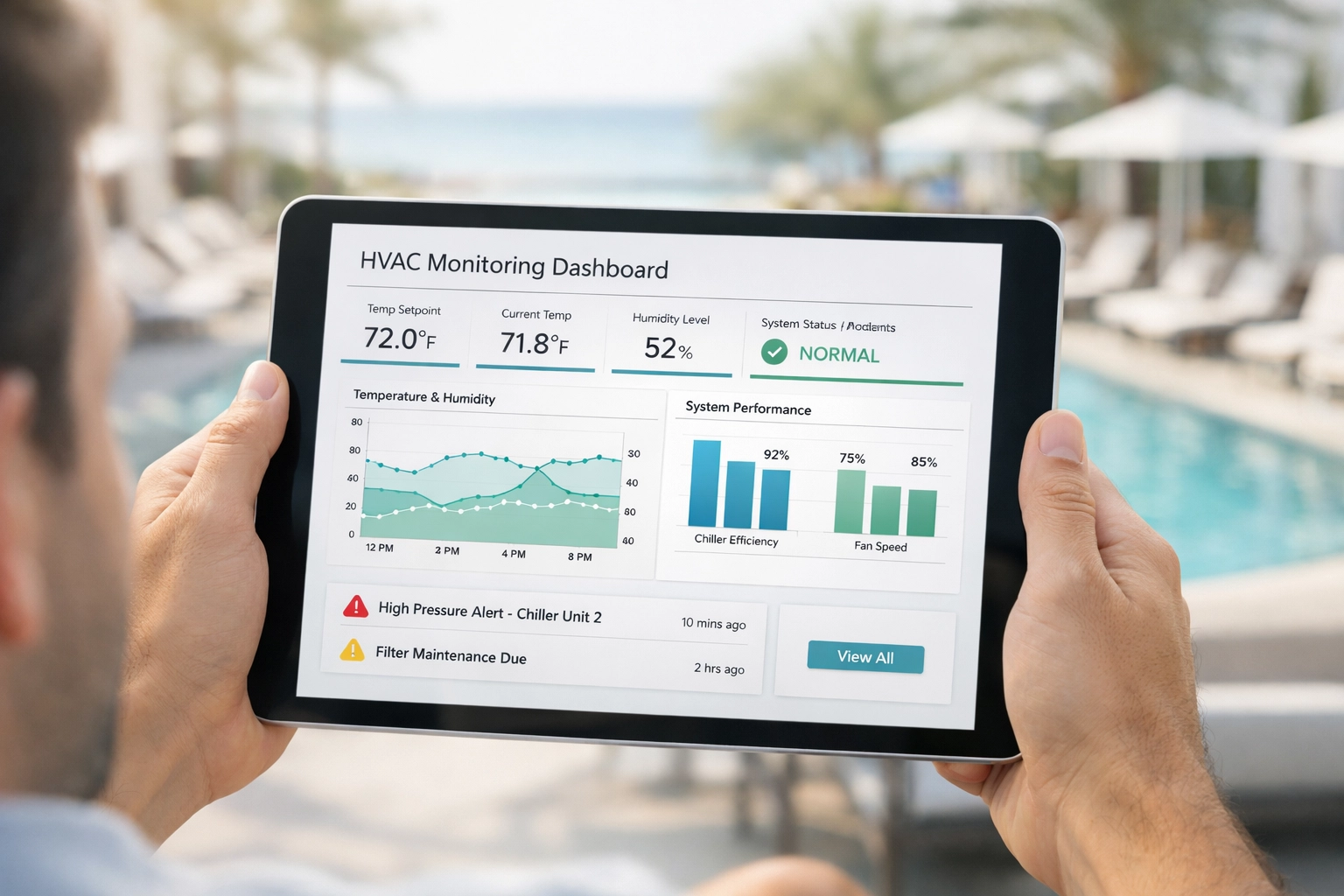
The fix: Smart HVAC Monitoring Systems shift operations from reactive to predictive. Instead of wondering if systems are performing efficiently, you know. Instead of getting surprised by failures, you receive alerts before minor issues cascade into expensive problems. For multi-property portfolios or high-occupancy resorts, the operational difference is transformative.
Mistake #6: Leaving Money on the Table Through Wasted Heat
More than one resort-level property discovered they were literally throwing away energy: waste heat from chillers and refrigeration systems that could be captured and reused for domestic hot water needs.
In one case, a heat recovery system achieved 40 percent savings over traditional fossil fuel heating. In another, a property captured laundry flash steam in a large storage tank to meet peak hot water demand. These weren't exotic technologies requiring massive capital investment. They were straightforward applications of heat recovery principles to existing systems.
The fix: Energy audits by professionals familiar with Hawaii's utility costs and climate conditions reveal opportunities specific to your property. What works for a mainland hotel might not translate directly, but the fundamental principle: capture waste heat and put it to work: applies across commercial hospitality operations.
Mistake #7: Running Inefficient Refrigeration Systems
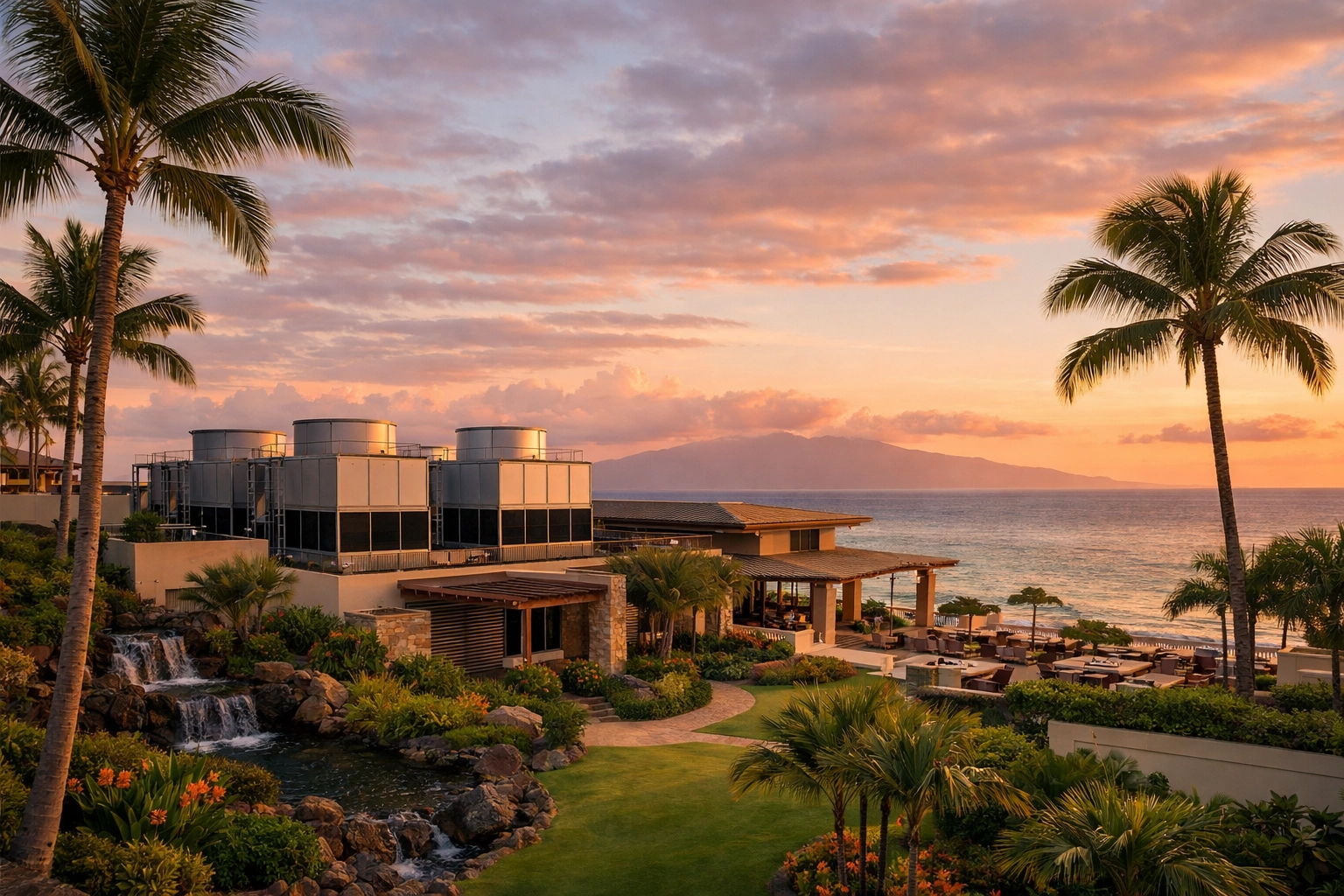
Commercial kitchens, walk-in coolers, and food service operations run constantly in Hawaii's market. Many properties operate refrigeration systems that work harder than necessary because they're cooled by methods designed for different climates or haven't been optimized for the specific heat load they're managing.
One property addressed this by using an available water source to cool kitchen refrigeration units instead of relying solely on air-cooled condensers: reducing cooling tower energy, make-up water, and chemical consumption in a single strategic shift.
The fix: Refrigeration efficiency starts with proper installation, continues through regular maintenance, and extends to creative approaches that account for Hawaii's unique resources. Whether it's walk-in coolers for resort restaurants or large-scale food service operations, the question isn't whether your systems work: it's whether they're working as efficiently as they could be.
The Real Cost of These Mistakes
Add up these seven mistakes across a resort property or multi-site portfolio, and you're not looking at minor inefficiencies. You're looking at substantial operational expenses that show up as inflated utility bills, emergency repair costs, reduced equipment lifespan, and guest satisfaction issues that affect revenue.
The major Maui resorts that addressed these challenges didn't just save energy: they improved operational reliability, reduced emergency calls, and created systems that perform consistently rather than unpredictably.
For property managers evaluating their own operations, the question isn't whether these mistakes exist at your facilities. It's which ones you're willing to continue funding through operational budgets rather than addressing strategically.
Hawaii's commercial HVAC and refrigeration environment doesn't forgive amateur approaches or deferred maintenance schedules. After nearly 30 years working in this specific climate, we've learned that the properties that perform best aren't necessarily the ones with the newest equipment: they're the ones that take Hawaii's operational challenges seriously and work with partners who understand what effective maintenance actually looks like in this environment.
If your property is making any of these seven mistakes, fixing them isn't just about reducing costs. It's about building operational reliability into systems that your guests, ownership, and bottom line depend on every single day.
Comments