
The Property Manager's Guide to Mastering Oahu HVAC and Beating the Humidity

Author: Alltemp Team Date: March 4, 2026 Read time: ~7 minutes
Several developments have been stacking up across Hawaii over the past year: busier shoulder seasons, higher expectations for “always perfect” indoor comfort, and the familiar reality that salt air + humidity will humble even the best-run facilities. None of these trends feel dramatic on their own, but together they raise a critical question for property managers and resort owners: would your HVAC systems earn a passing grade if they were evaluated today: comfort, energy, uptime, and indoor air quality included?
On Oahu (and yes, this applies to Maui too), humidity isn’t just “weather.” It’s an operating condition that directly affects guest experience, housekeeping workload, mold risk, energy spend, and how often you’re dealing with after-hours calls that start with, “It’s not cooling.”
This guide breaks down how humidity actually behaves in real buildings, what to watch for, and how to run HVAC like a system: not a string of emergencies.
Quick navigation
Humidity 101 (for people who run buildings, not science fairs)
Humidity management may seem incremental: another maintenance line item, another sensor to install: but it signals something bigger: your HVAC is either controlling moisture on purpose, or accidentally. And “accidentally” tends to be expensive.
Here’s the practical version:
Temperature is how the space reads.
Humidity is how the space feels and how it behaves (musty odors, condensation, mold risk, sticky floors, slow-drying linens, swollen wood, corrosion).
Your AC removes humidity only when it runs long enough and cold enough across the coil: and only if the air is actually moving through the system the way it was designed.
A useful target for most commercial interiors is ~45–55% RH. Drift much higher and you’ll feel it in complaints, odors, and “why is everything damp?”
The Oahu twist: outside air wants to move in
Oahu buildings fight moisture through a combo of:
outdoor air ventilation requirements,
door traffic and pressure imbalance,
leaky envelopes (it happens),
and equipment that’s oversized or poorly controlled.
If the building is slightly negative (more exhaust than supply), it can pull humid outdoor air through every crack it can find: louvered doors, elevator shafts, loading zones, you name it. Comfort complaints then show up as “AC isn’t working,” even when the supply air is technically cold.

Your “it’s cold but it feels damp” problem is usually a control problem
Across commercial spaces: lobbies, corridors, meeting rooms, tenant suites: humidity failures often masquerade as cooling failures. While it may look like you need more tonnage, the pattern is frequently the opposite: too much capacity, not enough runtime, plus controls that aren’t tuned for moisture.
Common causes you can actually do something about:
1) Oversized systems short-cycle
Short cycles satisfy temperature fast, then shut off. Moisture removal needs steady coil time. Short-cycling is how you get:
cold rooms with clammy air,
condensation on diffusers,
occasional “rain” from vents (not a vibe).
2) Fan settings that re-evaporate moisture
If the blower runs continuously after the compressor stops, moisture sitting on the coil can re-evaporate back into the space. It’s like taking out the trash… and then bringing it back in.
3) Outdoor air and exhaust not balanced
If exhaust is cranked and supply isn’t, the building sucks humid air inward. In high-traffic zones, that’s a constant moisture delivery service.
4) Dirty coils and filters = less dehumidification
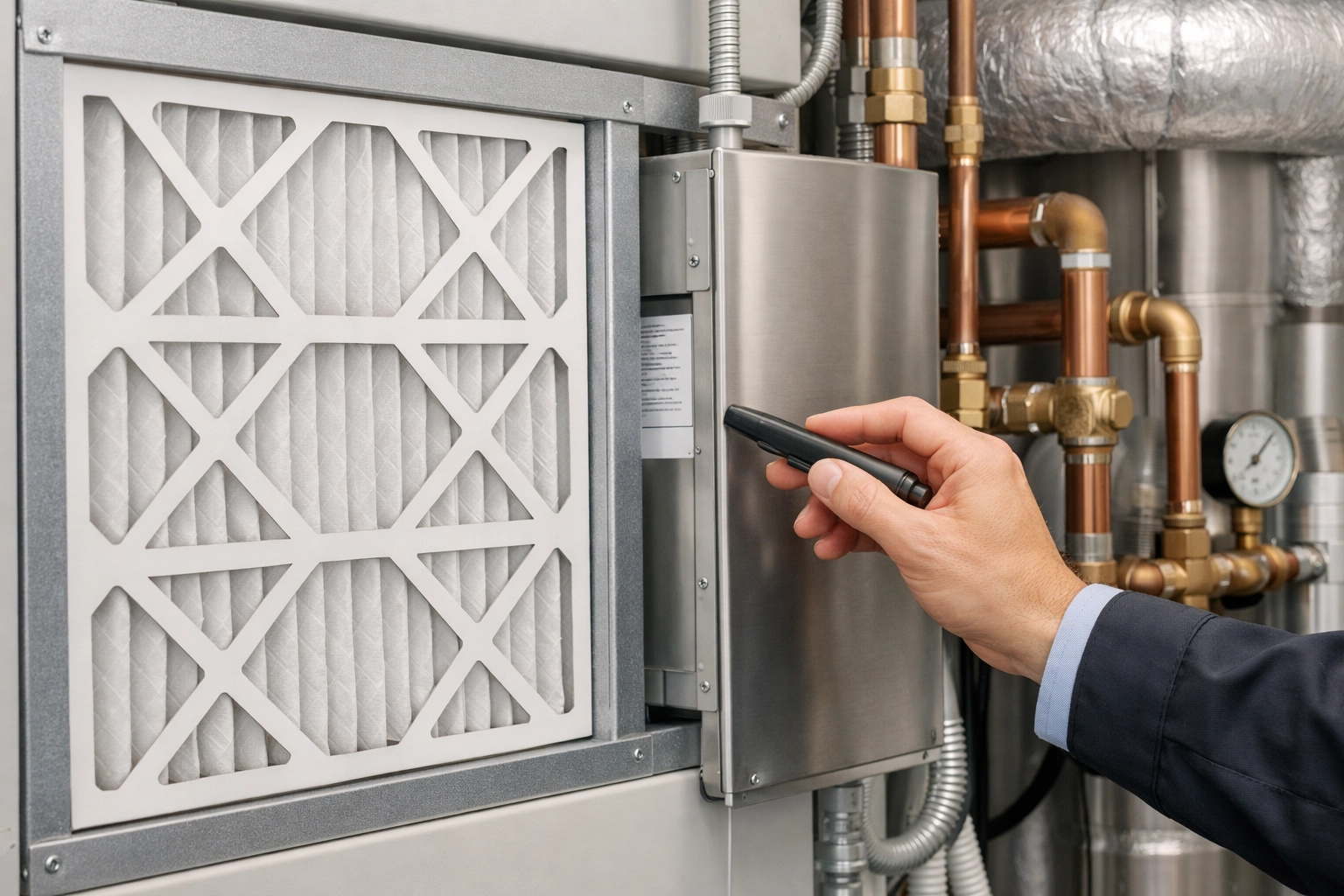
A dirty evaporator coil doesn’t just reduce cooling: it reduces latent capacity (dehumidification). Filters that are loaded also reduce airflow in ways that make systems behave unpredictably.
5) Drain line restrictions
A partially blocked condensate drain can trigger float switches, overflow pans, or intermittent shutdowns. It may not look like a “humidity problem” until you’re repainting ceilings.
The property manager’s HVAC checklist (weekly → quarterly)
If you’re managing multiple sites on Oahu and Maui, the win isn’t heroic response time: it’s catching small performance drift before it becomes a guest-facing situation.
Weekly (10–20 minutes per mechanical area)
Walk mechanical rooms: listen for unusual cycling, vibration, or belt squeal.
Check for active condensate overflow signs: wet pans, stains, algae smell.
Confirm thermostat setpoints haven’t been “creatively adjusted.”
Spot-check a few zones with a handheld hygrometer: note RH trends.
Monthly
Replace or clean filters as required by run time and environment (salt + dust + lint are real).
Inspect outside air intakes for blockage and corrosion.
Confirm drains are flowing (don’t assume: verify).
Review any recurring comfort complaints for patterns by time of day, weather, or occupancy.
Quarterly (where performance is won or lost)
Clean evaporator and condenser coils as needed.
Verify economizer and damper operation (if applicable).
Check refrigerant circuit health (superheat/subcooling trends: not just “pressure looks okay”).
Confirm building pressure strategy (especially if you have heavy exhaust loads).
Calibrate sensors that drive decisions (temp/RH/CO₂ where used).
If you’re running air conditioning Maui sites and Oahu sites, keep the checklist consistent, but expect the coastal salt exposure and occupancy profiles to change your “normal.”
Hydro Jetting: the “gross but effective” move for stubborn drain issues
Condensate drains in Hawaii don’t just clog: they evolve. Biofilm, algae, sediment, and whatever the building picks up over time can reduce drain capacity until the line behaves fine… right up until peak occupancy.
Hydro Jetting is one of those tools that sounds intense because it is: high-pressure water cleaning that scours the inside of drain lines rather than poking a small hole through a blockage and calling it a day.
Why it matters operationally:
Helps prevent recurring backups that trigger shutdowns.
Reduces overflow risk (ceilings, walls, guest rooms: pick your least favorite).
Improves system reliability without guessing which section is “probably clogged.”
Hydro Jetting may seem like overkill until you tally the cost of the third “same drain” call in two months: plus the paint, drywall, and downtime.
Smart Monitoring: fewer surprises, fewer midnight calls
The past year offered plenty of reminders that reactive maintenance doesn’t scale: especially across multi-building properties, tenant spaces, or resort-style footprints where a single failure ripples into housekeeping, front desk, and online reviews.
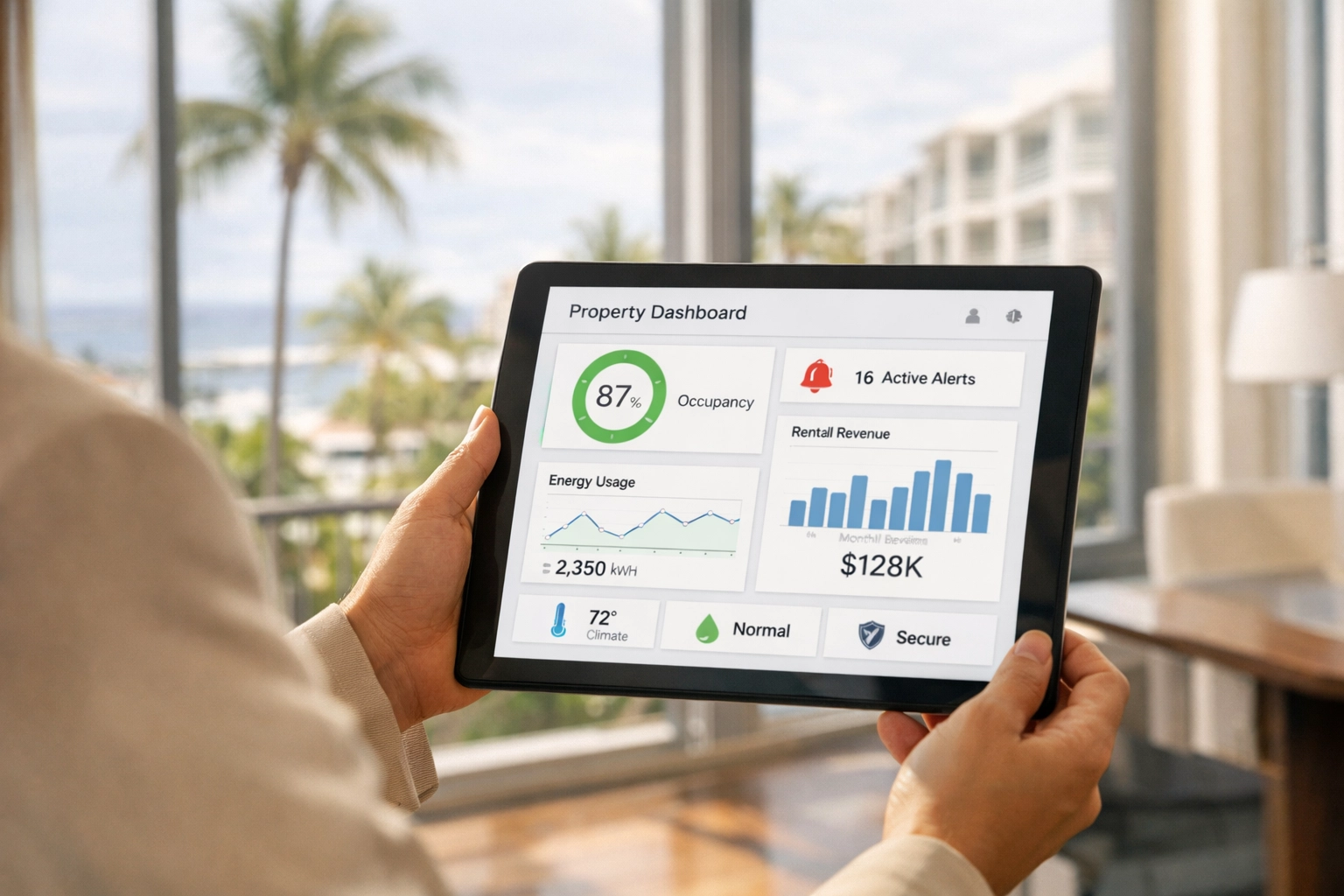
Smart monitoring shifts the work from “find out when it breaks” to “notice when it’s drifting.”
What remote monitoring can surface early:
runtime anomalies (short-cycling, constant run),
temperature/RH trends by zone,
equipment that’s drawing abnormal power,
intermittent faults that never show up during a scheduled visit.
The point isn’t to watch dashboards for fun. It’s to reduce blind spots: so maintenance decisions can be based on patterns, not surprise.
If you’re evaluating this approach, Alltemp’s overview is here: https://www.alltemphi.com/alltemp-commercial-smart-monitoring
And for a deeper dive into how monitoring reduces operational risk: https://www.alltemphi.com/alltemp-commercial-smart-monitoring-save-and-get-rid-of-risks
Refrigeration service in Hawaii: humidity has a side quest
Property managers and resort operators often treat HVAC and refrigeration as separate universes. In reality, they share the same villains: heat, humidity, corrosion, and deferred maintenance.
Humidity-related refrigeration issues tend to show up as:
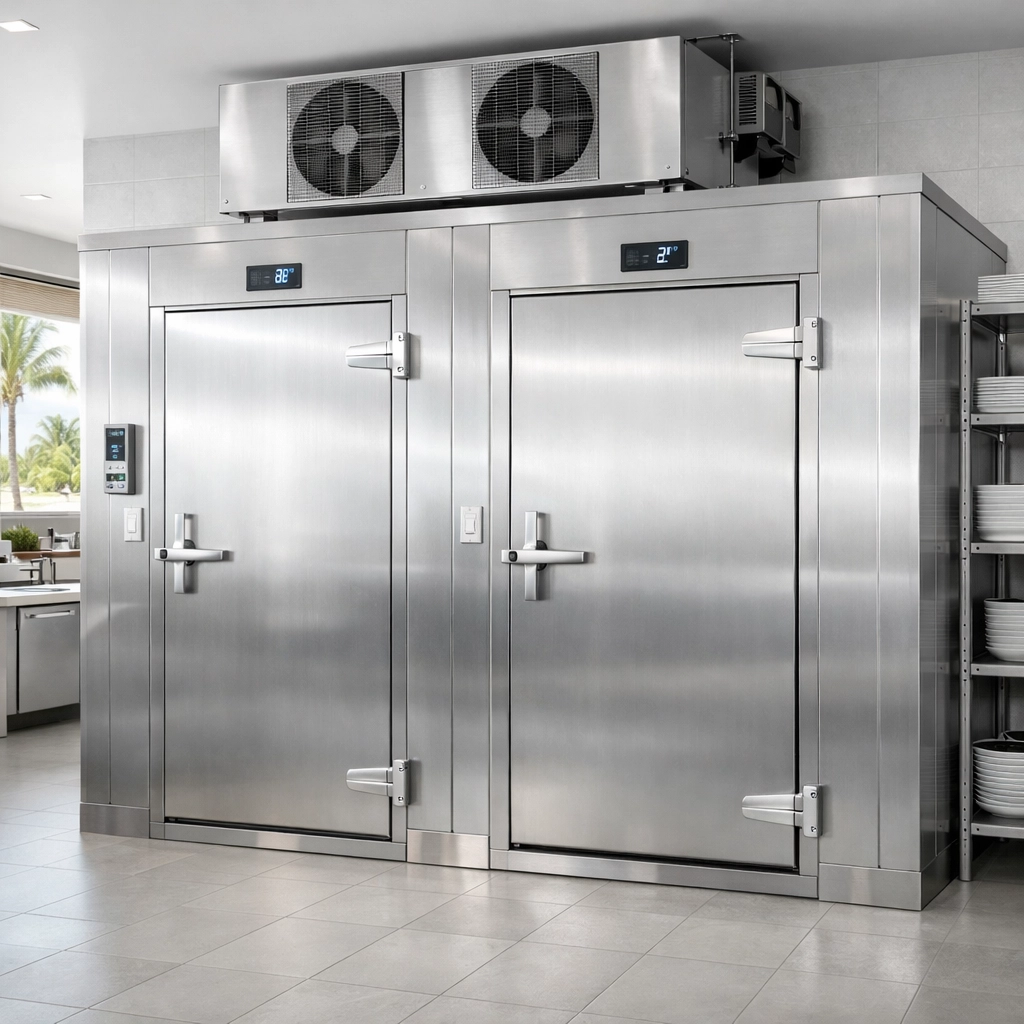
door gasket failures (warm, moist infiltration → ice buildup, longer runtimes),
condenser coil fouling (especially in salty environments),
drain problems in walk-ins and cases,
temperature swings that look like “equipment problems” but are airflow, load, or defrost timing issues.
If you manage food & beverage, convenience retail, or any back-of-house cold storage, refrigeration service Hawaii isn’t just about keeping product cold: it’s about keeping systems efficient enough that they aren’t quietly inflating your energy spend every day.
A simple operational tell: if the box is “holding temp” but the system seems to run constantly, that’s not a win: it’s a warning.
Indoor air quality (IAQ): the humidity multiplier
IAQ conversations can get abstract fast, so here’s the property-manager translation: high humidity makes everything harder.
It increases the chance of microbial growth on coils, in drain pans, and in duct liners.
It intensifies odors (and how quickly they spread).
It makes filtration “feel” ineffective because the space still feels heavy.
It creates more condensation risk on cold surfaces: diffusers, supply grilles, chilled lines.
Practical IAQ moves that are actually manageable:
Keep RH in range consistently (not just during a site visit).
Replace filters on a schedule tied to real conditions, not wishful thinking.
Verify ventilation is doing what you think it’s doing (outside air that’s uncontrolled can be an RH Trojan horse).
Keep coils and drain systems clean: because biology loves warm, wet, dark places.
What to ask your HVAC contractor (so you’re not guessing)
Contractor selection may seem like a basic checkbox, but on Oahu it’s a risk-management decision: licenses, training, and process discipline matter.
A baseline requirement in Hawaii is a Class C-52 Ventilating and Air Conditioning Contractor license (HVAC work). When you’re vetting partners for ongoing maintenance or ac repair Maui work across sites, here are the questions that separate “we can fix it” from “we can manage it.”
Questions worth asking
How are you measuring humidity performance: by space RH trends or just thermostat temperature?
Do you check building pressure relationships (especially in properties with strong exhaust)?
What’s your standard for coil cleanliness and airflow verification (static pressure, temperature split, etc.)?
How do you prevent repeat condensate issues: do you offer solutions like Hydro Jetting when appropriate?
Can you support remote monitoring for multi-site visibility and early warning?
What’s your preventive maintenance cadence: twice yearly minimum is common, but does it match your occupancy and environment?
If you’re managing multiple properties, the most valuable answer is usually the one that sounds like a system: documented inspections, trend tracking, and clear thresholds for action: rather than “call us when it stops cooling.”
The refrigerant transition is also a property-planning issue (not just a technical one)
Even if your current comfort issues are humidity and reliability, refrigerant policy changes may shape what you replace, when you replace it, and how you budget for it. Across Hawaii’s commercial spaces, that’s becoming part of longer-range capital planning rather than a surprise in the middle of peak season.
For a plain-English overview of the 2025 transition context and what it signals operationally, this resource is useful: https://www.alltemphi.com/post/what-hawaii-businesses-need-to-know-about-the-2025-hvac-refrigerant-transition-aim-act-of-2020
A simple “passing grade” scorecard for Oahu HVAC (and Maui too)
If you wanted a quick, defensible way to evaluate whether your HVAC strategy is actually beating humidity: without waiting for the next complaint: this scorecard is a solid start:
Comfort: Are you holding both temperature and ~45–55% RH during peak load?
Consistency: Do problem zones repeat, or does performance swing by time of day?
Reliability: Are condensate shutdowns, freeze-ups, or nuisance alarms recurring?
Efficiency: Are runtimes and energy use stable, or creeping upward month-over-month?
Visibility: Would you know a unit is short-cycling today, or only after someone calls?
Maintenance reality: Are coils, filters, and drains maintained on evidence and schedule: or vibes?
If the answers are “mostly,” that’s actually good news: it means your operation is close, and small adjustments: controls, cleaning strategy, monitoring, drain reliability: may produce outsized comfort and cost improvements.
For properties balancing comfort, humidity, and uptime across multiple islands, that’s the whole game.
For commercial HVAC and refrigeration services info (without the salesy detour): https://www.alltemphi.com/commercial
And if you’re comparing service coverage by location, you can reference:
Comments